

Autonomous Power Supply to Preserve a Unique Plant Collection
Electrical Engineering Solutions (EES) (ЕТР)
20 days
Background and Objectives
Unique botanical collections require not only scientific research and proper care but also stable environmental conditions. Temperature, humidity, and lighting directly affect the survival of tropical and subtropical plants.
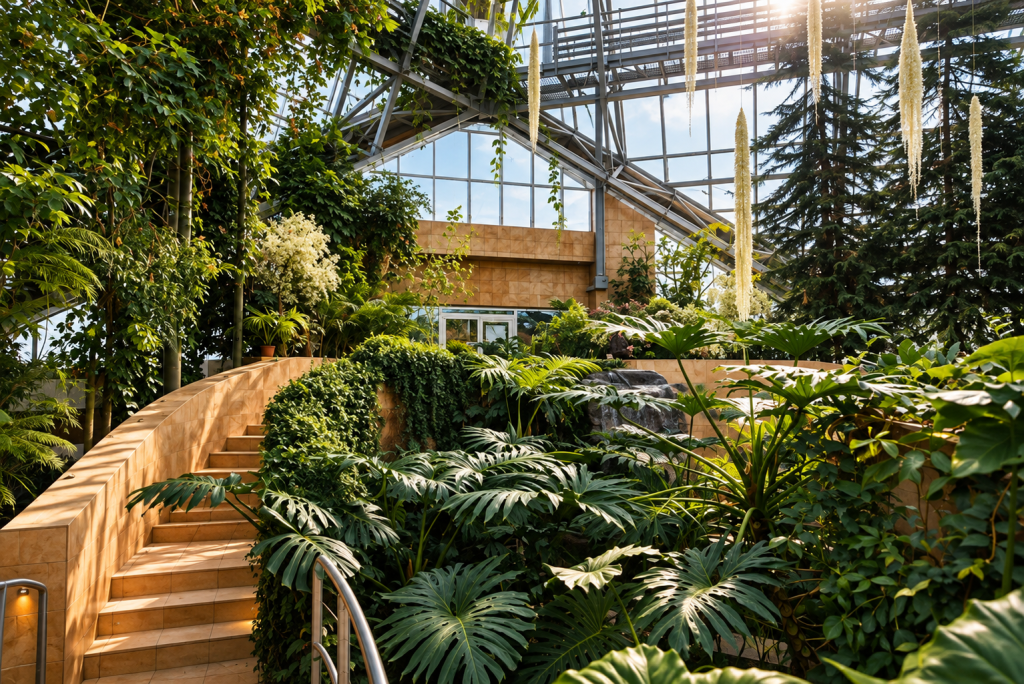
In the context of the full-scale war and regular power outages, the greenhouse facility of the M.M. Hryshko National Botanical Garden faced a serious challenge. Interruptions in the operation of heat pumps, climate control systems, and lighting could have jeopardized many years of scientific work and the preservation of rare plants.
The Compass Engineering team joined a charitable initiative aimed at protecting the collection and implemented an autonomous power supply solution for the greenhouses.
- Establishing a reliable source of backup power
- Automatically switching the greenhouse facility to backup power in case of grid outage
- Maintaining the operation of heat pumps and other critical life-support systems
- Reducing the risk of losing unique botanical specimens due to power supply interruptions
Solution Implementation
In 20 days, the Compass Engineering team completed a comprehensive set of works to implement autonomous power support.
Cummins C55 D5 Generator
The Cummins C55 D5 diesel generator manufactured in the USA was procured and installed to provide backup power to the greenhouse facility. The equipment became the primary source of autonomous power supply for the critical greenhouse systems.
Automatic transfer switch
An automatic transfer switch (ATS) was integrated into the system to ensure automatic switching to the generator in case of the loss of voltage in the main power grid. Due to automation, backup power is activated without manual intervention by personnel, which is particularly important for maintaining sustainable greenhouse conditions during prolonged outages.
Connection of life-support systems
Heat pumps and other critical elements of the greenhouse facility’s engineering infrastructure were connected to the backup power supply. It ensured the continued operation of the systems required to maintain the appropriate temperature and environmental conditions for the plants.
Protection of the unique collection
The autonomous power supply allows preserving the collection of more than 400 orchid species that scientists have cultivated and maintained for over 50 years. The collection includes rare specimens that have disappeared or are endangered in their natural habitats.
Uninterrupted operation of critical systems
In case of the main power grid outage, heat pumps and other connected systems can keep operating from the generator, maintaining the conditions required for the plants.
Automatic switching
The automatic transfer switch (ATS) ensures the rapid shift to backup power without personnel’s manual switching.
Further Development
The implemented solution allows connecting additional greenhouses, including premises housing bromeliads and bulbous plants.
Partnership for Natural Heritage
The project was the result of the joint effort involving businesses, the scientific community, and charitable initiatives. Compass Engineering provided the technical implementation and integration of the autonomous power supply system. Vadym Keller’s information channel initiated the fundraising campaign to implement the solution. The Peli Can Live Charitable Foundation supported the initiative and facilitated its organization.
“It is extremely important for us to take part in such initiatives helping preserve Ukraine’s aesthetic values. It is a truly significant contribution to supporting Ukraine’s national wealth and natural heritage, which has suffered greatly as a result of hostilities,” Vitalii Rozdobutko, the Director of Compass Engineering.
“The survival of this plant collection is critically important nowadays, as it represents decades of work by scientists, and some of the specimens no longer exist in the wild. They require the uninterrupted power supply because the conditions for their preservation are closely related to maintaining appropriate temperature, humidity, and lighting,” Roman Ivannikov, the Head of the Department of Tropical and Subtropical Plants at the Botanical Garden, Doctor of Biology.